Datasets: Driving Business Growth With Insights and Analytics
Data analytics is changing the way businesses operate, and it is moving with unabated momentum. With Data analytics showing no signs of slackening, understanding and utilizing datasets is imperative for businesses vying to surf this tide. But do datasets really matter? Yes, it does coz datasets make it easier for businesses to conduct analysis and perform mathematical and other operations. What does this imply? It implies that as datasets encompass data in a set, it allows businesses to easily comprehend an overwhelming amount of numbers and information.
What are data sets?
Collection of any data, which is presented in a tabular form and consists of rows and columns, is referred to as datasets. Each row represents an individual observation or instance, and each column specifies a specific variable or attribute associated with relative observation. Varying widely in size, and complexity, datasets can be made up of a few entries, or they can comprise data at scale, i.e., millions or even billions of records. Every business uses datasets in a unique way to conduct analysis and derive insights. For instance, a law firm can utilize datasets to study their sales and understand their client’s needs, a multinational company might use it to analyze market trends and financial metrics, and a research organization might leverage it to analyze or compare their findings.
When we discuss datasets, a question that frequently pops up in mind is whether they are the same as databases. Let’s eliminate the confusion. Databases are much larger than datasets; they hold a greater amount of information about different datasets. Datasets comprise one specific topic, and they need to be stored in a computer so that they can be accessed, updated, and manipulated later.
Difference Between Datasets and Databases
| Dataset | Database |
|---|---|
| Collection of data organized in a specific format | Collection of organized data stored and accessed electronically |
| Used for machine learning, research, and data analysis | Used to store and manage large amounts of data |
| Stored in a variety of formats, like spreadsheet, a CSV file, gigasheet or a database | Stored as data types, like text, numbers, and images |
| A subset of data extracted from a larger database | Multiple datasets used for different applications |
| Utilized for a specific purpose | Utilized as a comprehensive and long-term storage solution |
What qualifies as a dataset?
For various interlocking reasons, there has been a massive increase in the data generated globally. The enormous drive for data generation is occurring due to factors like artificial intelligence and social media becoming the norm of the day and the integration of IoT devices into daily life. According to the World Economic Forum, approximately 463 exabytes of data are created each day globally!
Qualities of a dataset
- Variables: Specific attributes that are being studied within the dataset.
- Schemas: A dataset’s structure, which includes the relationship and syntax between its variables.
- Metadata: Context about the dataset, like its origin, purpose, and usage.
What are the salient features of a dataset that dictate terms and conditions for usage?
Datasets have specific features that impact their use for analysis, as well as the insights they provide. These features include:
- Size: Number of data points the datasets contain. The size of the dataset dictates its computational requirements, storage capabilities, and the type of analysis that can be performed with the dataset.
- Dimensions: Number of variables associated with each data point in a dataset that corresponds to the structure of tabular representation. Dimensions of the dataset determine its use with respect to visualization, analysis, and modeling.
- Granularity: Level of detail or specificity a dataset provides. The granularity of a dataset determines the precision and resolution of the observation a dataset offers.
- Data type: Data points with different data types, including numerical (integers, decimals), categorical (labels, categories), text, dates, or binary values. Data type dictates the method to be used while handling the dataset, the preprocessing techniques to be followed, and the type of analysis that can be done using the dataset.
- Structure: The formats of data, i.e., structured or unstructured. The structure of a dataset determines the type of extraction, transformation, and analysis techniques that can be performed.
Types of Datasets
Datasets are distinguished into two main categories based on the type of data and how it is structured.
Based on the types of data
- Qualitative datasets: Data represented in the form of qualitative answers. Ex: Answers to open-ended questions in interviews.
- Quantitative datasets: Data expressed in the form of values, counts, and numbers. Ex: Number of products sold.
- Categorical datasets: Data represented by variables that can take a limited number of possible values. Ex: Temperature.
- Multivariate datasets: Data created from two or more elements correlated to each other. Ex: Height and weight.
- Web datasets: Data gathered from websites using web scrapping methods. Ex: Search engine rankings.
- Multimedia dataset: Data comprising images, audio recordings, and other media formats.
Based on the structure of the data
- Structured datasets: Data available in a well-defined format.
- Tabular datasets: Data structured in rows and columns format.
- Non-tabular datasets: Data available in formats like JSON code. As structured datasets follow consistent schemas, businesses can utilize them to initiate rapid querying and reliable analysis. Structured datasets are an ideal choice for business intelligence tools and reporting systems that are highly reliant on precise and quantifiable data.
- Semistructured datasets: Data that is partially structured. Semistructured datasets have defined syntax or markers, allowing information to be organized in flexible formats. Owing to flexible formats, semistructured datasets are the best fit for data integration and applications that need to handle diverse data types.
- Unstructured datasets: Data available in different types of formats. Unstructured datasets are enriched with information that deviates from the traditional data models and rigid schemas. As they provide valuable insights that structured data usually fail to capture, unstructured datasets require sophisticated processing tools. Unstructured datasets are the preferred choice of businesses to power train artificial intelligence and machine learning models.
Examples of datasets
| Sl No: | Type of dataset | Example |
|---|---|---|
| 1 | Structured | Customer databases with standardized formats for contact information and purchase history |
| 2 | Semistructured | Public datasets combining multiple data formats |
| 3 | Unstructured | Chat logs and customer service transcripts |
What are the sources of datasets?
Some of the sources that businesses can access datasets include the following:
- Data repositories
- Databases
- Application programming interfaces (APIs)
- Public data platforms
- Data vendors
Datasets: Core component of an enterprise’s success
Owing to the valuable and crucial insights they provide, datasets have become the backbone of analysis, decision-making, competitive analysis, and more. Here are a few aspects that emphasize the importance of datasets for businesses of every scale.
1. Making Informed decisions
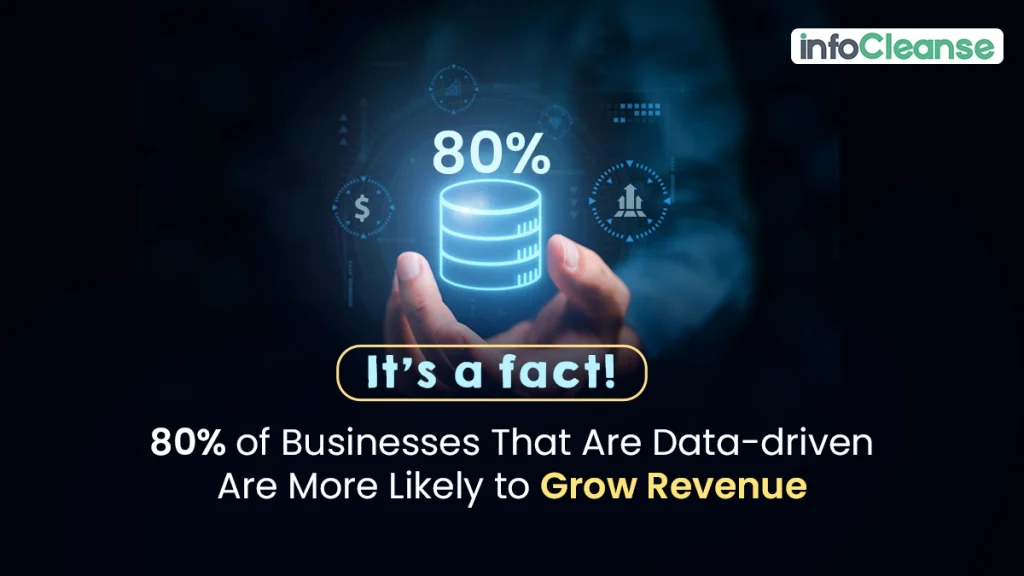
Can businesses witness success by making strategic decisions based on gut feel? The answer is no, coz 91% of businesses globally, have bid adieu to make decisions based on gut feeling and have embraced data-driven decision making. This massive percentage alone emphasizes the need for businesses to use datasets. A well-organized dataset is the cornerstone of effective decision-making. It allows businesses to gain sufficient knowledge about customer behavior, their pain points, and market trends and make decisions about the right partnerships and collaborations, which boost profits by 6%.
2. Always staying in the loop
A business that keeps its ear to the ground will always gain immense benefits. To be more precise, businesses must conduct frequent market research to determine how external factors can shape any positive or negative outcomes, prioritize market segments for exploration, and strengthen and scrutinize brand health. Owing to such high-impactful results, around 59% of businesses take up market research. Datasets provide businesses with a landmine of information, empowering them to initiate market research, know what is happening in the TAM, create better products, and take up sales forecasting to reach the targets.
3. Capitalizing on underserved opportunities
Businesses can extract key insights about ventures of every scale across industries and verticals, comprehend their competitor’s tactics, identify market gaps, and forecast demand. With an effective competitor analysis in place, businesses can easily identify market gaps and come up with innovative offerings to capitalize on any underserved opportunities.
4. Real-time analytics
As datasets are continuously updated, they enable real-time analytics. This aspect is a big boon for businesses functioning in industries like finance, where timely information obtained through real-time analytics is crucial for split-second decisions. Besides this, leveraging datasets for real-time analytics allows businesses to track their operations, build more responsive apps, create effective supply chain models, and increase their venture’s functional and operational efficiency
Datasets: Intrinsic for ground-breaking technology’s prolific outcomes

Businesses across the globe are embracing AI, machine learning, and other innovative cutting-edge technologies for efficiency and success. But what makes these cutting-edge technologies deliver prolific outcomes, which in turn create a long-lasting impact on business growth? It is a dataset that is considered the foundation and the building blocks of several revolutionary technologies. High-quality datasets provide relevant information that drives algorithms and creates AI and other advanced technological models that perform efficiently in real-world situations.
Here is an overview of how datasets can be applied in global B2B businesses.
1. Datasets and AI
The importance of AI cannot be emphasized more, with around 72% of businesses opting for generative AI to gain a competitive edge. Though employing AI for impactful business outcomes is a possibility, a challenge looms large over this application. Businesses must ensure the use of high-quality data to train algorithms while deploying AI. Hence, this necessitates the use of accurate datasets while implementing and creating AI models.
NLP models need English and multilingual datasets to comprehend language and drive LLM, translation, and text analysis tools. Besides this, labeled image datasets can be used to train AI models to recognize faces, objects, and visual patterns. In addition to this, datasets play a crucial role in predictive analytics, as they are employed in training models to forecast pricing surges and consumer demand in various industries. Vast research datasets can be leveraged to train AI and accelerate product discovery.
2. Datasets and Analytics
Datasets, when used for data analytics, provide valuable insights driving discovery and innovation. Employing large datasets for business analytics uncovers hidden trends and anomalies, helping B2B firms identify new opportunities, eliminate risks, and formulate result-focused GTM for marketing wins. Datasets also play a vital role in data visualization, as the information they have can be processed via visualization tools to create charts and dashboards and make data more accessible for everyday business operations.
3. Datasets and BI tools
Datasets are crucial in business intelligence as they are the raw material for analysis, which provides solid insights into patterns (customer behavior, buying patterns), industry, and market trends. Metric datasets can be used with BI tools for real-time monitoring of operations and system performances. Transaction and engagement datasets can be utilized to get a sneak peek at customers’ preferences and purchasing patterns, and insights derived allow businesses to develop targeted marketing strategies to enhance buyer experiences across touch points and gain a competitive edge. Integrated datasets, when used in business intelligence, help enterprises analyze inventory and vendor performance and optimize supply chain performance.
Datasets and their pitfalls
Datasets have the immense potential to provide insights that drive strategic growth and empower businesses to scale economies. However, leveraging large and complex datasets introduces several challenges and considerations.
Some of the challenges and the approach to resolve them are as follows:
- Accuracy: When the dataset’s cardinal features, data integrity, and accuracy are missing, the results go askew. Hence, appropriate validation and verification techniques must be put in place to ensure the authenticity and accuracy of information in datasets.
- Integration: System compatibility while integrating datasets from different sources or formats is a concern that needs to be addressed. Standardizing data formats to align data structures in accordance with system compatibility will mitigate this challenge.
- Ethics: Privacy concerns loom large while using datasets containing personal information or any biased data. Implementing data anonymization and privacy measures and strict adherence to compliance norms (CAN-SPAM, CCPA & GDPR) can mitigate these issues.
Factual examples of datasets
When used responsibly, datasets enable businesses across sectors and industries to function efficiently. From helping businesses make the right decisions for fetching the right outcomes, to perceiving their audience better, datasets are vital for formulating compelling marketing endeavors for ABM wins and more.
Here are some of the real-world examples of how businesses in different sectors employ datasets to their advantage.
- Healthcare: Hospitals use electronic health record (EHR) datasets and device manufacturers to track medical histories, identify any looming health risks among patients, and detect patterns of disease outbreaks in the population during flu season.
- Finance: Financial market datasets containing credit histories, transactional records, and stock price records are used by investment firms to assess stock market trends and develop predictive models for stock price movements
- Transportation: Ride-sharing companies use real-time traffic datasets to analyze traffic flow data, identify the shortest routes and nearest pick-up and drop points, and minimize passenger wait time. Logistics and transportation companies utilize datasets to choose the best possible routes and reduce traffic congestion.
- Retail: Sales datasets are used by retail and e-commerce companies to assess purchasing trends, plan inventory, and formulate pricing strategies for driving revenue growth. Customer transaction datasets offer a landmine of information to retail companies to comprehend consumers’ past purchases and make appropriate product recommendations for rapid sales.
- Energy and utility: Energy and utilities companies leverage smart meter datasets to track energy consumption patterns and to create power distribution strategies, and identify opportunities for energy conservation and grid management
- Recruitment: Recruitment firms leverage LinkedIn datasets, company datasets, to access profiles of potential prospects across industries to pursue their hiring and talent acquisition endeavors.
- Construction: Real estate firms and construction companies use urban planning datasets comprising information on population demographics, transportation networks, and land use patterns to build hospitals, new schools, gated communities, and townships and develop national infrastructure.
Wrapping Up
In this data-driven era, datasets are the concepts of almost every business entity in the world. From training machine learning models to helping researchers comprehend phenomena, testing and proving hypotheses, recommending content themes for marketing teams, helping businesses understand user behavior and purchase patterns, and shaping policy decisions, datasets have changed the way they function.